
MeenakshiSteel Traders
By Teja | May 10, 2026 | 5 min read
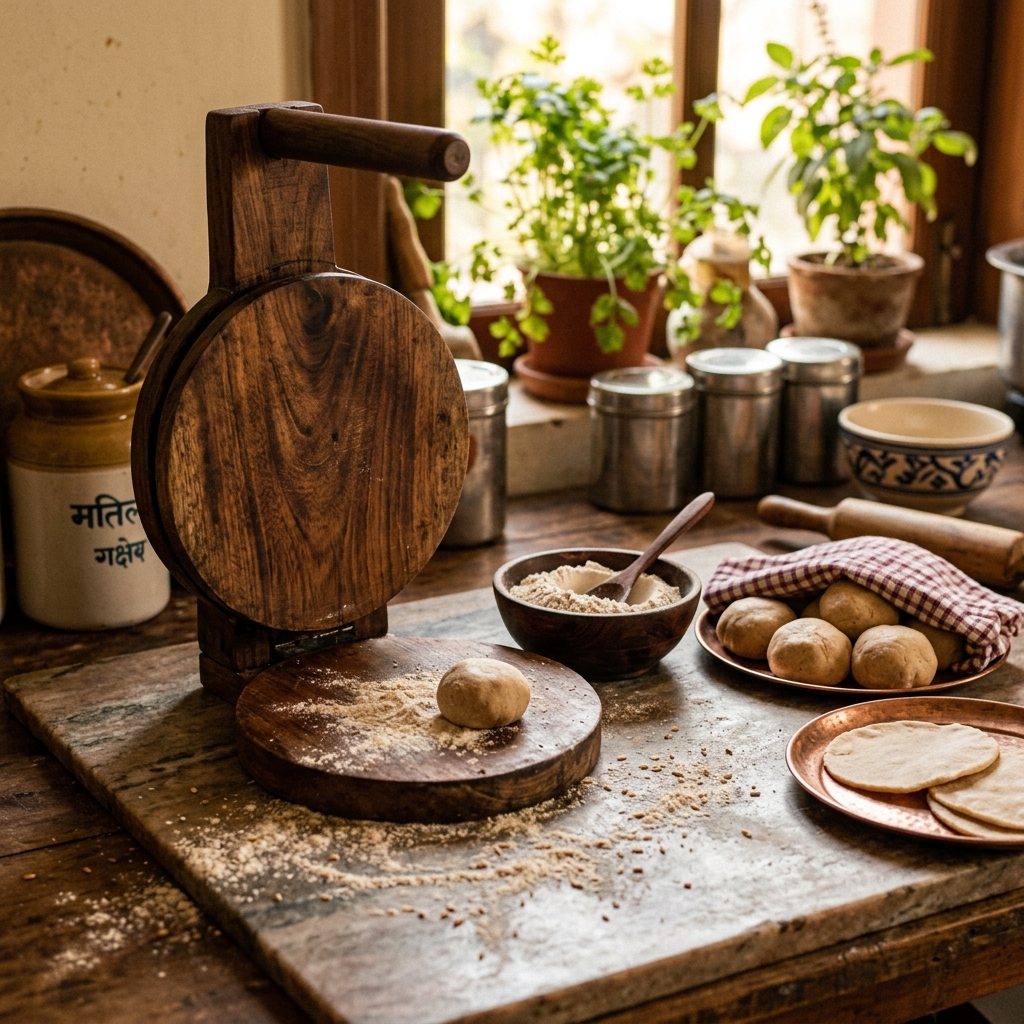
There are few sounds as comforting in an Indian kitchen as the rhythmic sizzling of a fresh puri puffing up in hot oil. Puris are the quintessential festive bread, the Sunday morning comfort food, and the perfect accompaniment to everything from spicy chole to sweet shrikhand. However, rolling out perfectly round, evenly thick puris by the dozen using a traditional rolling pin (belan) can be exhausting and time-consuming. Enter the traditional Wooden Puri Maker (or Puri Press)—an age-old tool that simplifies this laborious task, allowing you to create flawless puris with a single, gentle press. In this comprehensive guide, we will explore why a wooden puri maker is vastly superior, how to select the right one, and the secrets to maintaining it for generations.
While stainless steel and cast iron puri presses are readily available, wooden puri makers hold a special place in the traditional Indian kitchen for several crucial reasons. Firstly, wood has natural microscopic textures. Unlike the highly polished, slippery surface of a stainless steel press, wood gently grips the dough. This slight friction ensures that the dough does not shrink back instantly after being pressed—a common frustrating issue with metal presses. Secondly, wood acts as a natural insulator. It doesn't get cold during winter, keeping the dough at an optimal temperature. Finally, a heavy wooden press utilizes its own natural weight to flatten the dough, requiring significantly less arm strength from the user.
Not all wooden puri makers are created equal. When purchasing one, look for heavy hardwoods like Teak (Sagwan), Sheesham (Indian Rosewood), or Neem. These woods are incredibly dense, which means they won't warp over time, and they possess natural antibacterial properties. Pay close attention to the hinge mechanism. The hinges should be bolted deeply into the wood, not merely glued or tacked on with small screws. A high-quality press will feature a sturdy, ergonomically curved handle that fits comfortably in your palm, ensuring that the downward force is distributed evenly across the plates.
Just like a cast-iron skillet, a new wooden puri press must be seasoned before its first use. Wood is naturally porous; if you use it immediately, the moisture from the dough can seep into the wood, causing it to crack or warp. To season it, generously coat the pressing surfaces with a food-safe oil, such as cold-pressed coconut oil, groundnut oil, or food-grade mineral oil. Let the wood absorb the oil overnight. The next day, wipe off the excess. Repeat this process 2 to 3 times. This oiling process creates a natural, waterproof, non-stick barrier on the wood.
Using a wooden puri maker correctly is an art. A common mistake is pressing too hard, resulting in tissue-paper-thin puris that tear in the oil and fail to puff. Here is the perfect method:
While named a 'Puri Maker', this versatile tool is not limited to deep-fried breads. It is an absolute lifesaver for preparing a variety of flatbreads and snacks. You can use it to press out perfectly uniform mathris, small papads, and even the base for empanadas or gujiyas. Some cooks even use it to quickly flatten out dough balls for soft, small tacos or momo wrappers, drastically cutting down prep time.
The cardinal rule of maintaining a wooden puri press is: Never wash it with water. Submerging wood in water, or running it under a tap, will cause the wood fibers to swell, leading to irreparable cracks and warping. Since you are using oiled plastic sheets as a barrier, the wood itself should rarely get dirty. After using the press, simply wipe it down with a dry or very slightly damp microfiber cloth to remove any stray flour dust. Once every few months, re-apply a light coat of cooking oil to the wood to keep it hydrated and looking lustrous.
Incorporating a traditional wooden puri maker into your kitchen is a brilliant way to embrace heritage while improving efficiency. It turns the daunting task of rolling out dozens of puris into a quick, effortless assembly line. By selecting a high-quality hardwood press from Meenakshi Steel Traders and maintaining it with simple oiling and dry cleaning, you ensure that this beautiful, functional piece of culinary history will serve your family for a lifetime, making every festive meal a joyous, stress-free occasion.