
MeenakshiSteel Traders
By Teja | May 28, 2026 | 6 min read
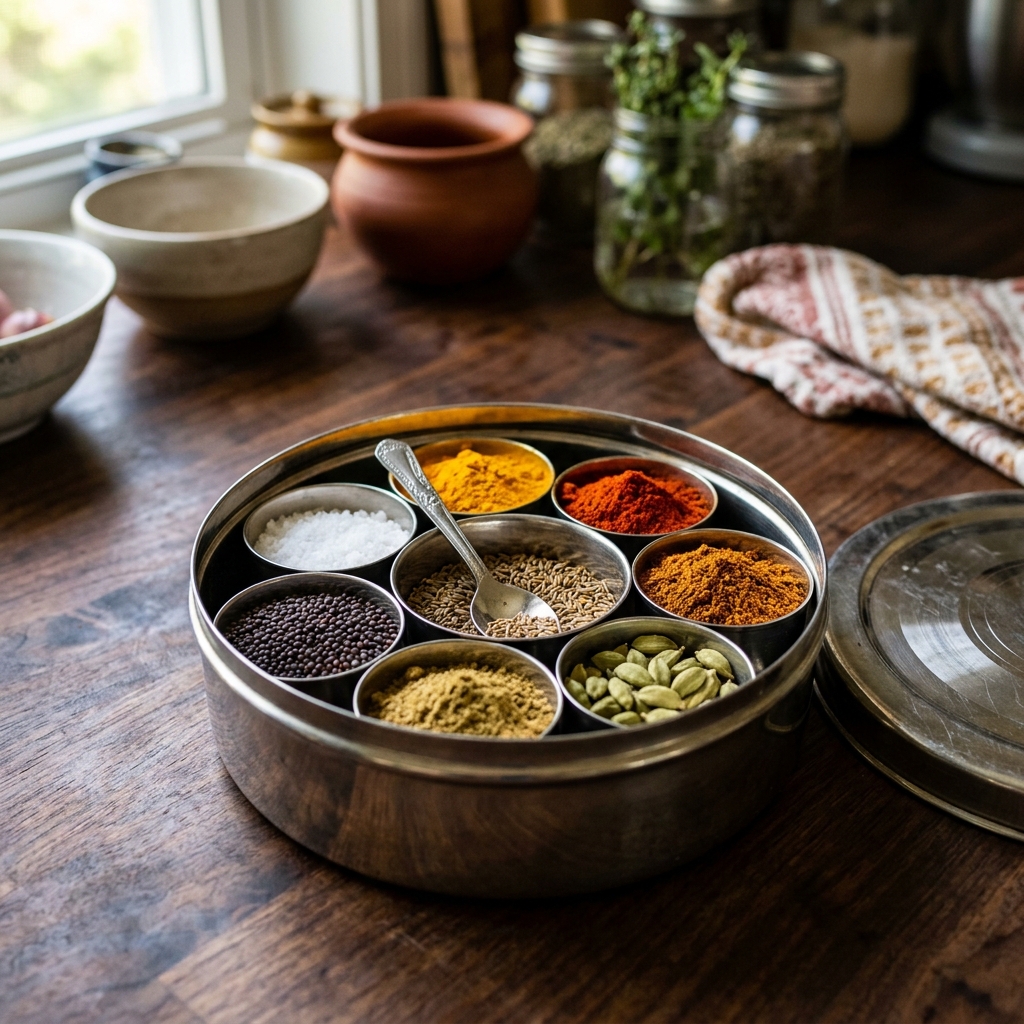
Step into any Indian kitchen, anywhere in the world, and you will find a common beating heart: the Masala Dabba. This seemingly simple, circular stainless steel or brass container is far more than just a storage vessel. It is a painter’s palette of flavors, the secret behind the complex layering of Indian curries, and an heirloom passed down from mothers to daughters. Whether you are an aspiring cook looking to dive into Indian cuisine or a seasoned chef wanting to streamline your workflow, understanding and organizing your Masala Dabba is the first crucial step to culinary mastery.
Translated literally, 'Masala' means spice, and 'Dabba' means box. A traditional Masala Dabba is a large, flat, circular tin made of stainless steel, brass, or copper. Inside this outer container sit seven smaller, individual bowls (katoris), each holding a different, frequently used spice. It usually comes with a small measuring spoon that fits perfectly inside. The beauty of the Masala Dabba lies in its efficiency. Instead of rummaging through cabinets for seven different jars while your onions are burning on the stove, you simply remove one lid to have instant access to your entire flavor profile.
Why seven bowls? Historically, seven has been a significant number in Indian culture, representing the seven days of the week, the seven chakras, and the seven colors of the rainbow. In culinary terms, seven provides just enough variety to create a vast array of dishes without overwhelming the cook. The exact spices within the seven bowls change depending on the region of India you are in—a North Indian box looks very different from a South Indian one—but the underlying principle remains the same: a balance of color, heat, aroma, and earthiness.
If you are setting up your first Masala Dabba to cook classic dishes like Butter Chicken, Chole, or Dal Makhani, here is the quintessential North Indian setup:
South Indian cuisine relies heavily on tempering with lentils and distinctly different spices. A South Indian Dabba might look like this:
While plastic spice boxes are available, they are highly discouraged. Plastic absorbs the potent aromas of the spices and easily stains yellow from turmeric. Stainless Steel, like the premium Dabbas offered by Meenakshi Steel Traders, is the modern standard. It is unbreakable, easy to clean, non-reactive, and has an airtight lid to keep moisture out. Brass Dabbas are heavier, more traditional, and offer a stunning, vintage aesthetic, though they require occasional polishing to maintain their shine.
Spices are the soul of your food, and they deserve respect. Keep your Masala Dabba away from direct sunlight and away from the immediate heat and steam of the stove when not in use. Spices lose their volatile oils over time. It is better to buy spices in small quantities, store the bulk in airtight jars in a dark pantry, and only refill the small bowls in your Dabba every few weeks. This ensures that every pinch you add to your pan is as potent and aromatic as possible.
Every cook’s Masala Dabba is unique. As you grow more confident in your cooking, you will naturally swap out spices, creating a box that reflects your personal culinary signature. It is a brilliant, tactile way to engage with your ingredients. Invest in a high-quality stainless steel or brass Masala Dabba, fill it with vibrant, fresh spices, and unlock the true, efficient joy of Indian cooking.