
MeenakshiSteel Traders
By Teja | May 25, 2026 | 7 min read
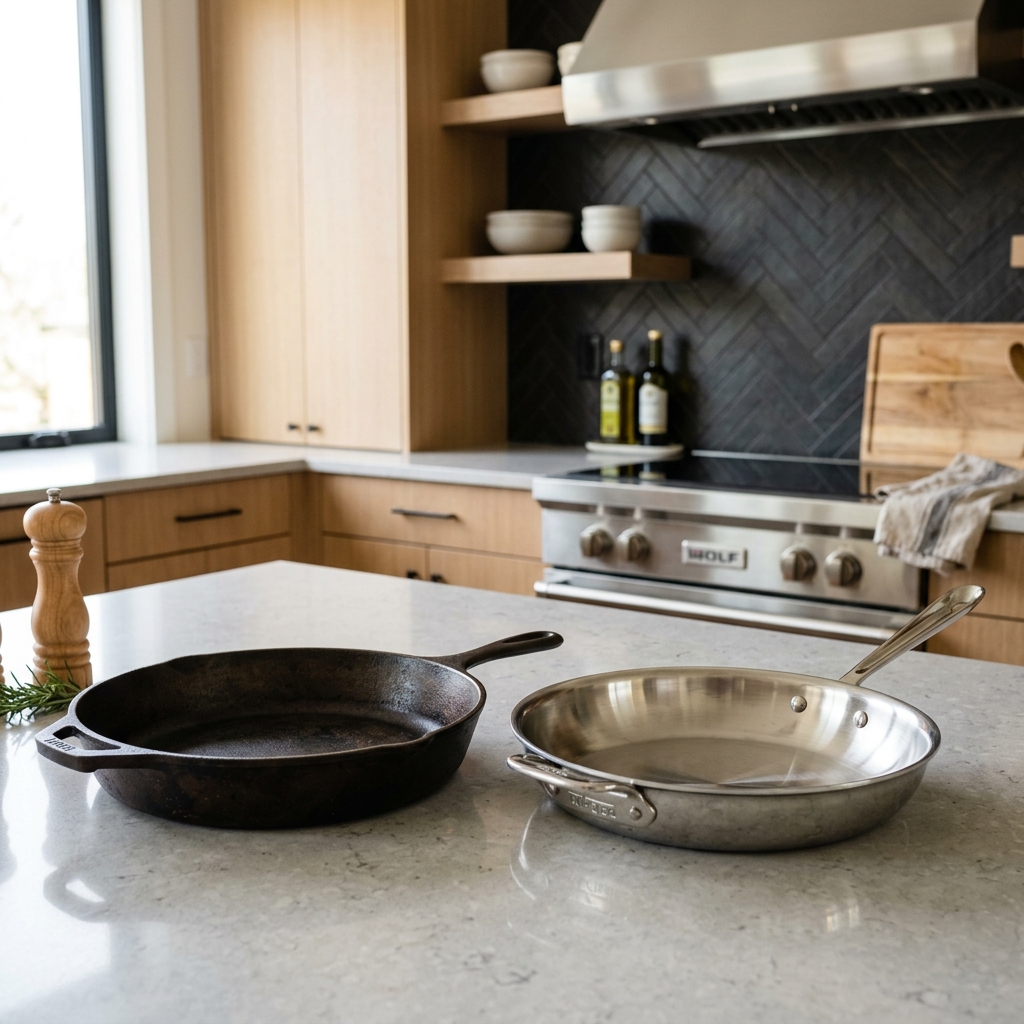
Walking into a premium kitchenware store, the sheer variety of gleaming pots and heavy black pans can be overwhelming. As health consciousness rises and culinary enthusiasm grows, home chefs are rapidly moving away from toxic, disposable non-stick pans. In their place, two titans of the culinary world have emerged as the absolute essentials for any serious kitchen: Cast Iron and Stainless Steel. But which one should you choose? The truth is, a well-equipped kitchen needs both. Each material excels at vastly different cooking techniques. In this ultimate guide, we will break down the strengths of both materials, how to select the right pieces, and the mystical art of seasoning.
Cast iron is the workhorse of traditional cooking. Whether it’s an ancient Indian 'Loha' tawa for making crispy dosas, or a heavy Western skillet for searing steaks, cast iron is unparalleled in its ability to retain heat. Unlike lighter metals that drop in temperature the moment cold food hits the pan, cast iron acts like a thermal battery. It absorbs heat slowly, but once it gets hot, it stays blisteringly hot. This makes it the ultimate tool for achieving a perfect, restaurant-quality sear on meats, paneer, or achieving that beautiful char on roasted vegetables.
However, cast iron comes with a learning curve. It is heavy, it requires specific maintenance to prevent rust, and it is a reactive metal. You should never simmer highly acidic foods (like a heavy tomato sauce or vinegar-based marinades) for long periods in cast iron, as the acid will strip the seasoning and impart a harsh metallic taste to your food.
The magic of cast iron lies in its 'seasoning'. This is not salt and pepper; seasoning refers to a layer of polymerized oil that is baked into the microscopic pores of the iron, creating a tough, naturally non-stick, and rust-proof surface. Here is how to achieve the perfect season:
If cast iron is the heavyweight brawler, stainless steel is the agile, versatile gymnast. As discussed in our previous articles, stainless steel is non-reactive, meaning you can simmer acidic tomato gravies, wine reductions, and lemon sauces all day without fear of metallic tastes or damaging the pan. It is significantly lighter than cast iron, making it ideal for tossing stir-fries or pouring hot gravies.
When selecting stainless steel, avoid cheap single-ply pots. Look for "Tri-Ply" or "Clad" stainless steel. Stainless steel itself is a poor conductor of heat. Tri-ply cookware solves this by sandwiching a highly conductive core of aluminum or copper between two layers of surgical-grade stainless steel. This ensures the pan heats up rapidly and evenly across the base and up the sides, eliminating hot spots that burn food.
The biggest complaint about stainless steel is that food sticks to it. This happens because the user is fighting the physics of the metal. You can make a stainless steel pan act almost perfectly non-stick by mastering the 'Leidenfrost Effect'.
The Water Drop Test: Place your dry stainless steel pan on medium-high heat. Wait 2-3 minutes. Drop a tiny splash of water into the pan. If the water instantly boils and evaporates, the pan is not hot enough. If the pan is at the correct temperature, the water droplet will not evaporate; instead, it will form a perfect sphere, like a bead of mercury, and glide effortlessly across the surface of the pan. This is the Leidenfrost effect—a microscopic layer of vapor is insulating the water from the metal. Once you achieve this temperature, wipe out the water, add your cooking oil, let the oil heat for 10 seconds, and add your food (like a delicate fish fillet or paneer). It will glide across the surface without sticking!
To master the kitchen, you must assign the right task to the right tool. Use your well-seasoned Cast Iron tawa or skillet for searing meats, making crispy dosas, shallow frying tikki, and baking cornbread. The intense, steady heat will give you crusts that are impossible to achieve otherwise.
Reach for your Tri-Ply Stainless Steel kadais and saucepans for boiling pasta, creating acidic curries, sautéing vegetables, and pan-roasting chicken where you want to build a sticky 'fond' to deglaze into a rich, complex pan sauce.
Both cast iron and premium stainless steel are heirloom materials. Unlike non-stick pans that inevitably end up in landfills when their chemical coatings scratch, a heavy cast iron skillet or a tri-ply stainless kadai will outlast you. They don't just cook food; they hold the memories of thousands of family meals. By understanding their unique properties, investing in quality pieces from Meenakshi Steel Traders, and learning the simple science of temperature control and seasoning, you elevate your daily cooking from a chore into a masterful culinary art.